






Introduction
What if a joint replacement could be planned around a patient’s individual anatomy, performed with computer-assisted precision, and monitored long after surgery?
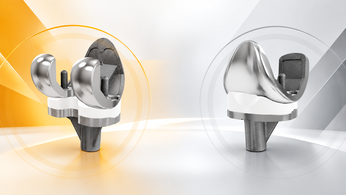
Joint replacement has evolved considerably from the conventional use of standard implants and manual surgical instruments. Today, advances in imaging, robotics, artificial intelligence (AI), additive manufacturing, biomaterials, augmented reality (AR), and connected devices are creating new possibilities for more personalized and data-driven orthopaedic care.1
These technologies are not replacing the surgeon. Instead, they are designed to provide better information, improve planning, support surgical precision, and potentially help clinicians understand how an implant performs over time. Robotic-assisted joint replacement for example, combines three-dimensional planning with computer navigation while keeping the surgeon in control of the procedure.2
Key Takeaways
- AI can assist with imaging analysis, preoperative planning, and patient-specific decision-making.
- Robotic-assisted joint replacement and navigation can support implant positioning and surgical planning.
- 3D printing enables complex geometries and, in selected applications, patient-matched or patient-specific devices.
- Advanced biomaterials and surface technologies aim to improve implant durability, fixation, and interaction with surrounding tissue.
- Smart implants with embedded sensors may eventually provide information about loading, movement, wear, or other parameters.
1. Artificial Intelligence: Turning Data into Clinical Insight
AI is increasingly being explored across orthopaedics, including imaging, surgical planning, implant sizing, and outcome prediction.
In joint replacement, AI algorithms can analyze medical images and help identify anatomical landmarks, assess alignment, and assist with preoperative planning. Recent studies have evaluated AI-assisted planning in total hip and total knee arthroplasty, although the evidence base is still developing and results are not yet uniform across applications.3, 4
The potential value is personalization.
The potential value is personalization. Instead of relying only on population-based measurements, AI may help clinicians interpret large amounts of patient-specific information and incorporate it into surgical planning. The goal is not to replace clinical judgment, but to provide clinicians with additional data to support it.
2. Robotic-Assisted Surgery and Computer Navigation
Robotic-assisted joint replacement is already being used in clinical practice for procedures such as total and partial knee replacement and hip replacement.2
These systems can combine preoperative three-dimensional planning with intraoperative navigation. Depending on the system, the technology can help the surgeon plan bone preparation, assess alignment, and position components according to the surgical plan.
Importantly, the robot does not independently perform the operation. The FDA describes robotically assisted surgical systems as computer-assisted technologies that remain under direct control of trained physicians.8
The future may involve increasingly sophisticated systems that integrate imaging, real-time feedback, and patient-specific planning.
3. 3D Printing: From Standard Implants to Patient-Matched Solutions
3D printing, or additive manufacturing, creates objects layer by layer from a digital design.5
In orthopaedics, the technology can produce implants and surgical instruments with complex geometries. It can also support the development of patient-matched or patient-specific devices based on individual imaging data.5
One major advantage is design flexibility.
Engineers can create structures that would be difficult to manufacture using conventional techniques, including complex internal geometries and porous structures intended for specific clinical applications.
As manufacturing technology advances, 3D printing may contribute to increasingly personalized implant designs.
4. Advanced Biomaterials and Implant Surfaces
The future of joint replacement is not only about better software and robotics. The implant itself continues to evolve.
Research is exploring advanced materials, surface modifications, coatings, and engineered implant interfaces designed to address challenges such as wear, corrosion, infection, and osseointegration.
For example, recent research into antibacterial and immunomodulatory coatings is investigating ways to influence the biological environment around orthopaedic implants.9
The long-term objective is to create implant surfaces that interact more effectively with surrounding tissue while maintaining mechanical and chemical stability.
5. Smart Implants: When the Implant Can Provide Data
Imagine an implant that could provide information about what is happening after surgery. This is the concept behind smart orthopaedic implants.
This is the concept behind smart orthopaedic implants.
Emerging sensor technologies are being investigated to monitor parameters such as loading, movement, wear, temperature, and other indicators of implant performance.5
Such information could eventually help clinicians understand how an implant is functioning in real-world conditions and potentially identify changes earlier.
However, many smart-implant applications remain under development. Questions around sensor durability, power supply, data transmission, biocompatibility, cybersecurity, and clinical validation still need to be addressed.
The future implant may not only restore movement it may also generate useful clinical data.
6. Augmented and Virtual Reality: Bringing Digital Planning Into the OR
AR and VR are opening another avenue for orthopaedic surgery.
Virtual reality can provide immersive environments for surgical education and simulation, allowing trainees to practice procedures without immediately working on patients. AR, meanwhile, can potentially overlay digital information onto the surgical field to support visualization and navigation.6
Recent discussions involving AAOS and FDA experts have highlighted AR, VR, and robotics as emerging technologies that could influence orthopaedic training and patient care over the coming years.6
As these systems mature, the operating room may increasingly combine physical anatomy with digital information in real time.
7. Digital Twins and Predictive Orthopaedics
One of the more ambitious concepts in future orthopaedics is the digital twin a digital representation of an individual patient or joint that can incorporate anatomical and clinical information.
For joint replacement, future systems could potentially combine imaging, biomechanics, patient characteristics, surgical data, and postoperative information to model how a joint replacement may perform.
Research into digital-twin approaches for knee osteoarthritis and knee replacement is still at an early stage, so this should be viewed as an emerging research direction rather than established routine clinical practice.10
If validated, such models could support more individualized planning and longitudinal monitoring.
How Will These Technologies Work Together?
The most important development may not be any single technology. Imagine a future workflow:
Imagine a future workflow:
Patient imaging → AI-assisted analysis → 3D anatomical model → Personalized surgical plan → Robotic navigation → Patient-matched implant → Smart postoperative monitoring

This represents a shift from simply replacing a damaged joint to developing a more integrated, data-informed pathway around the individual patient.
Conclusão
The future of joint replacement is moving beyond simply designing a better implant.
AI may help interpret patient data. Robotics can support surgical execution. 3D printing can expand design possibilities. Advanced materials can improve the implant–tissue interface. Smart implants may provide postoperative data, while AR, VR, and digital-twin technologies could further connect planning, surgery, training, and follow-up.
The real transformation may come from how these technologies work together.
The future operating room may not be defined by a single robot or device, but by a connected ecosystem in which patient anatomy, digital planning, implant design, surgical execution, and postoperative monitoring are linked more closely than ever before.
For orthopaedics, that could mean a gradual shift toward joint replacement that is more personalized, more data-driven, and increasingly precise while keeping clinical judgment and patient needs at the center of care.
References :
- American Academy of Orthopaedic Surgeons (AAOS). Innovation and Novel Technologies in Orthopaedic Surgery. https://www.aaos.org/
- American Academy of Orthopaedic Surgeons (AAOS). Robotic-Assisted Joint Replacement. https://www.aaos.org/
- Xue D, Wang K, He H, Wang L, Dai Y, Shen G, Chen Y, Chen J, Yang Y, Chen Z, Wang X. Comparison of artificial intelligence and traditional methods in preoperative planning for primary total hip arthroplasty: A systematic review and meta-analysis. Orthopaedic Surgery. 2025 Oct;17(10):2823–2834. https://doi.org/10.1111/os.70156
- Elsheikh R, Khan ZA, Avram GM, Huegli R, Nowakowski AM, Hirschmann MT. 3D imaging-based AI models outperform demographic models and excel in tibial sizing compared with 2D models in total knee arthroplasty planning: A systematic review. Knee Surgery, Sports Traumatology, Arthroscopy. 2026;34(3):1157–1169. https://doi.org/10.1002/ksa.70262
- Crawford M. What’s Next for Smart Implants in Health Care? Journal of Medical Internet Research. 2025 Nov 26;27:e87975. https://doi.org/10.2196/87975
- American Academy of Orthopaedic Surgeons (AAOS). AAOS and FDA Town Hall: Emerging advances in AR, VR, and robotics reshape orthopaedic training and patient care. 2026. https://www.aaos.org/aaosnow/2026/may/research/research01/
- U.S. Food and Drug Administration (FDA). 3D Printing of Medical Devices. https://www.fda.gov/medical-devices/products-and-medical-procedures/3d-printing-medical-devices
- U.S. Food and Drug Administration (FDA). Computer-Assisted Surgical Systems. https://www.fda.gov/medical-devices/surgery-devices/computer-assisted-surgical-systems
- Mao Z, Dong C, Jia Y, Li B, Zhijian W, Hu M. Antibacterial and Immunomodulatory Coatings for Orthopedic Metal Implants: Biological Rationale, Design Strategies, and Translational Challenges. Advanced Healthcare Materials. 2026 Jul 5:e00008. https://doi.org/10.1002/adhm.202600008
- Hoyer G, Gao KT, Gassert FG, Luitjens J, Jiang F, Majumdar S, Pedoia V. Foundations of a knee joint digital twin from qMRI biomarkers for osteoarthritis and knee replacement. npj Digital Medicine. 2025 Feb 21;8(1):118. https://doi.org/10.1038/s41746-025-01507-3
Frequently Asked Questions
AI, robotic-assisted surgery, 3D printing, advanced biomaterials, smart implants, AR/VR, and digital twins are transforming joint replacement by supporting personalized planning, surgical precision, implant design, and postoperative monitoring.1
The future is moving toward more personalized, precise, and data-driven joint replacement, with AI, robotics, 3D printing, and digital technologies working together. 1
AI can analyse patient-specific imaging, while 3D printing and digital modelling can support patient-matched designs and individualized surgical planning. 3
Key emerging technologies include AI, robotics, 3D printing, advanced implant surfaces, smart implants, AR/VR, and digital twins. 6
Technology may connect diagnosis, planning, implant design, surgery, and postoperative monitoring into a more integrated and personalized care pathway. 10
AI, robotic navigation, 3D printing, advanced biomaterials, smart implants, AR/VR, and digital twins are among the key technologies shaping joint replacement. 1








Deixe um comentário